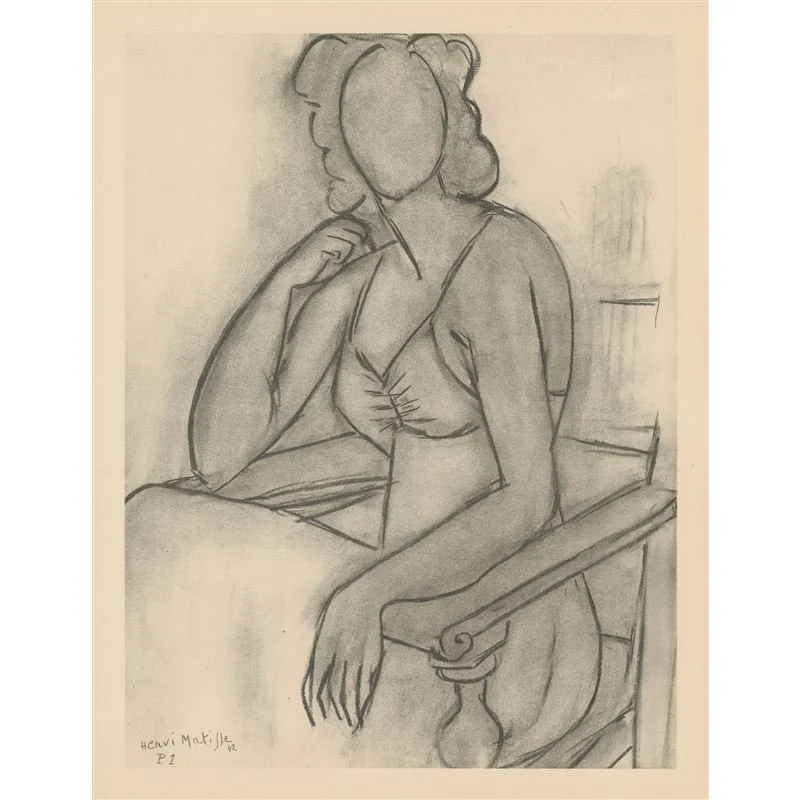
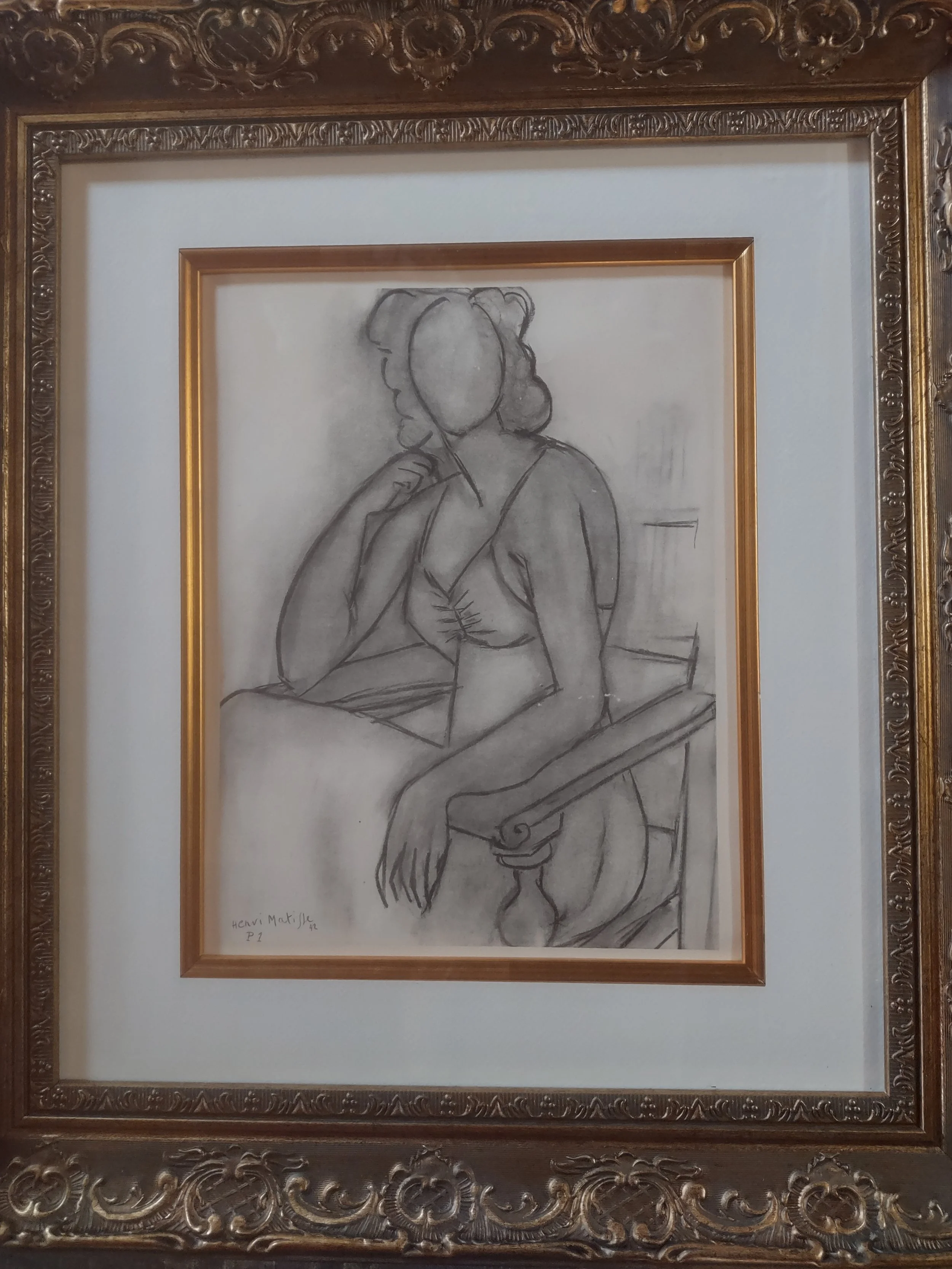
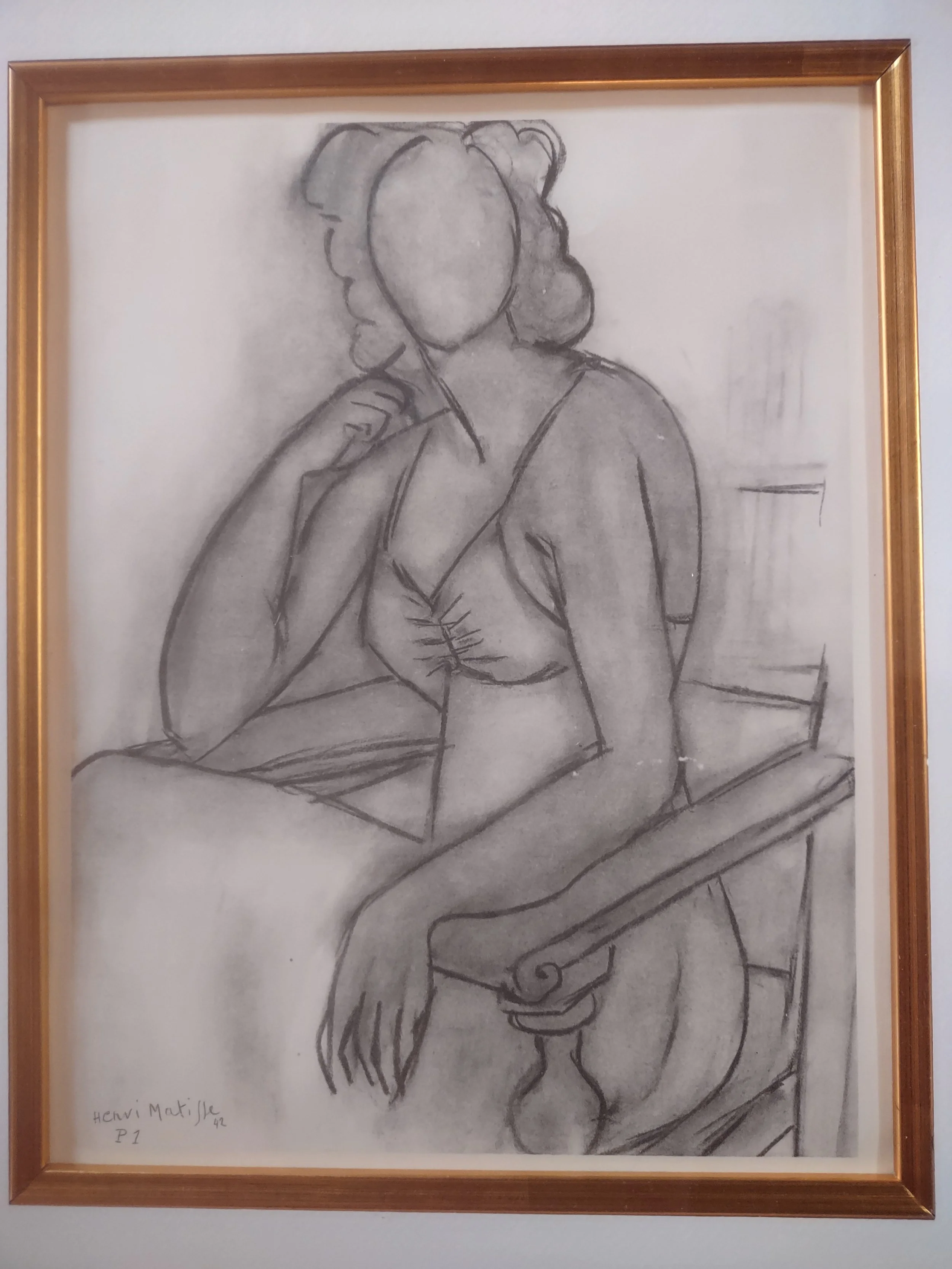
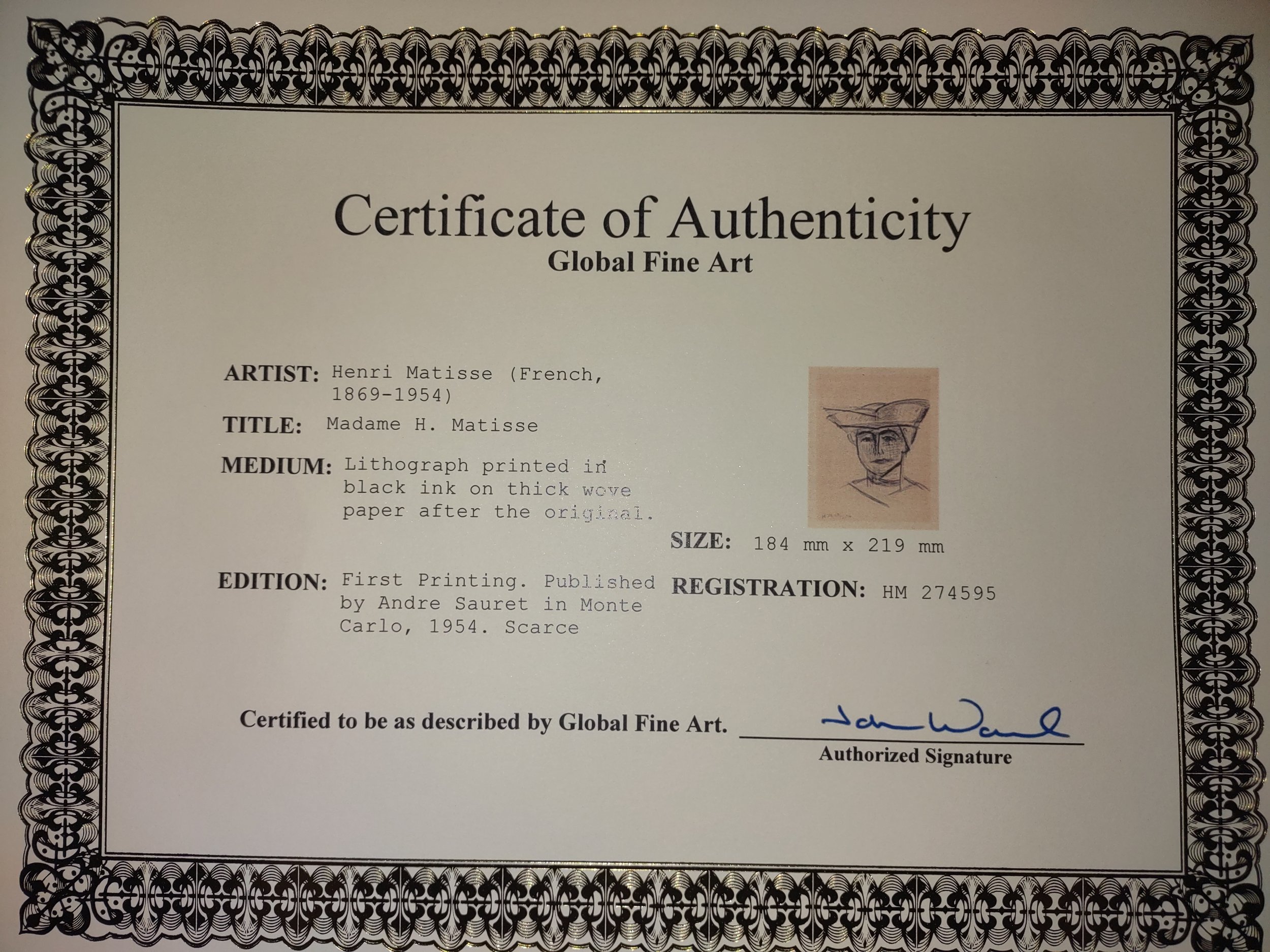
Artist: Henri Matisse (French, 1869-1954)
Year: 1929
Medium: Heliogravure printed in black ink on thick wove paper after the original
Description: Lifetime work, First Edition. Printed in Paris. Very Scarce.
Rendered with the confident economy of line that defined Matisse’s mature drawings, Les Deux Modèles presents two seated figures in a quiet, balanced arrangement. The composition emphasizes gesture and relationship through minimal contour, revealing the artist’s ability to capture character and mood with remarkable restraint. A poised and expressive work from Matisse’s late period.
Condition: Excellent
Image size: 220 mm x 275 mm
Museum style framing: Included
Frame size: 20” w x 18 1/2” h
Certificate of Authenticity: Included
Shipping:
Framed artworks ship within 3 business days in the continental U.S. International framed‑art shipments depart within 7–10 business days using our insured, flat‑rate worldwide service.
Returns: Please see our Returns & Inspection Policy in the FAQ.
Henri Matisse (1869–1954)
Henri Matisse stands as one of the defining figures of modern art, celebrated for his bold use of color, expressive line, and a lifelong pursuit of visual harmony. Emerging as a central force in the Fauvist movement in the early 20th century, Matisse pushed painting toward a new emotional intensity, using color not merely to describe the world but to transform it. His work evolved continually across six decades, moving from energetic early canvases to the serene interiors, portraits, and still lifes that became hallmarks of his mature style.
Matisse’s later years were marked by remarkable reinvention. After illness limited his ability to paint, he developed his celebrated cut‑out technique — compositions made from hand‑painted paper arranged with the same precision and lyricism as his earlier brushwork. These works, including Jazz and the chapel designs at Vence, are now considered masterpieces of modern visual language.
Across his career, Matisse’s art remained focused on balance, beauty, and the emotional impact of color. His influence shaped generations of painters, designers, and illustrators, and his works are held in major museums worldwide, including MoMA, the Tate, the Centre Pompidou, and the Hermitage. Matisse’s legacy endures as one of modernism’s most joyful and transformative voices — an artist who believed deeply in the power of art to uplift and inspire.